It seems like pets have never been more popular, and for good reason. They’re lovable, loyal, and part of the family.
But along with the joy comes pet hair… and that unmistakable dog smell.
You vacuum regularly to keep your home fresh, but somehow the odor still lingers. If that sounds familiar, the issue may be simpler than you think: you’ve transferred the smell from your floors to your vacuum cleaner.
Q: Why does my vacuum cleaner smell bad after cleaning up dog hair?
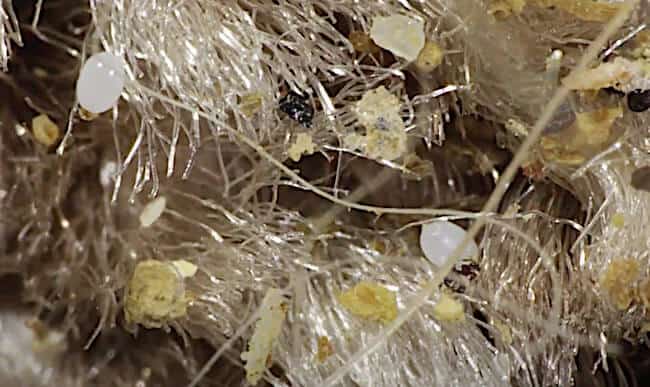
Pet hair carries oils, dander, and moisture that get trapped inside the vacuum’s bag, filter, and hose. Over time, bacteria build up, causing unpleasant odors that are released every time you vacuum.
If your vacuum smells like a dog, here’s exactly how to fix it.
1. Essential Oils
If you want both your home and your vacuum to smell fresh, essential oils are an excellent solution.
They don’t just mask odors, they help neutralize them while spreading a pleasant scent throughout your space.
How to use:- Fill a 32 oz spray bottle with water
- Add 30 drops of essential oil
- Add 1 teaspoon of baking soda
- Shake well
- Spray lightly inside the vacuum bag or dust canister
- Lemongrass
- Thyme
Feel free to use any scent you prefer. Repeat occasionally for ongoing freshness.
2. Baking Soda
Baking soda is a universal odor neutralizer, and it works just as well inside your vacuum.
How to use:- Add 2 tablespoons of baking soda directly into the dust bag or canister
This helps absorb (and trap) lingering pet smells before they circulate back into the air.
Bonus tip:When drying a wet carpet (especially after pet urine), sprinkle 2–4 tablespoons of baking soda over the damp area and let it dry for 24 hours. This prevents odors from transferring into your vacuum later.
3. Commercial Deodorants
Vacuum deodorants are specifically designed to eliminate unpleasant smells. Many contain activated charcoal, which absorbs odors effectively.
Simply place the deodorant inside the vacuum bag or bin and enjoy a fresher-smelling clean. These products come in a variety of scents, making it easy to find one you like.
4. Fabric Softener Sheets
Fabric softener sheets work similarly to essential oils and are incredibly easy to use.
How to use:- Place one sheet inside the vacuum bag, dust bin, or interior compartment
When you vacuum, the airflow distributes a fresh scent throughout your home.
5. Herbs and Spices
If you prefer natural solutions, fragrant herbs and spices can help eliminate vacuum odors without chemicals.
Best options:- Cinnamon (powdered) – Use 2 teaspoons in the dust bag or bin
- Orange peel – Cut into small pieces and place carefully inside
- Lemon verbena – Optional, especially for darker carpets
Avoid using too much, cinnamon has a strong scent, and excess powder can become messy.
You can also sprinkle these lightly on carpets just before vacuuming.
6. Wash Your Vacuum Cleaner
If your vacuum regularly collects pet hair and dander, odors are unavoidable, even with deodorizing tricks.
That’s why cleaning your vacuum thoroughly every 3–6 months is essential.
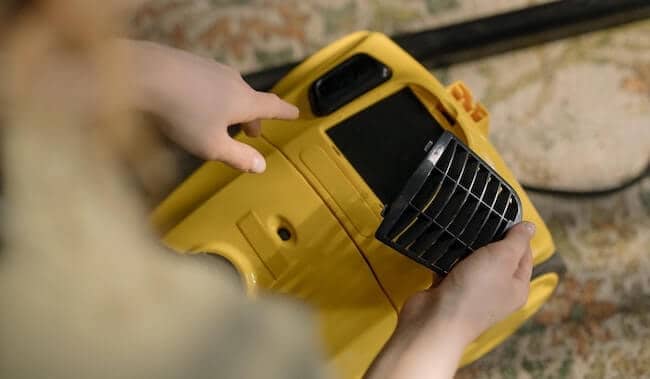
Washable parts:- Filters (if washable)
- Hose
- Dust bin
- Rotating brushes
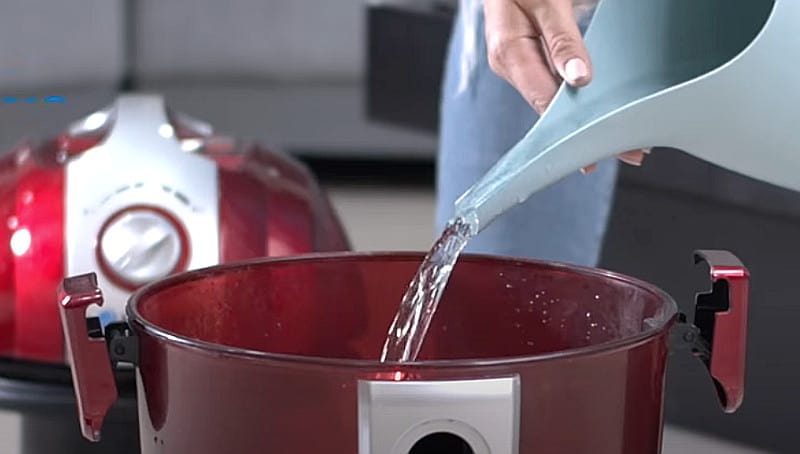
- 5 cups hot water (never cold)
- 1 cup white vinegar
- 2 tablespoons dish soap
Hot water will kill bed bugs and bacteria, vinegar disinfects, and dish soap removes grime and odors.
Pay special attention to brushes, this is where most pet hair tends to pile up. If your hard to push vacuum cleaner is becoming difficult to maneuver, accumulated pet hair and debris on the brushes are often the cause.
After cleaning, dry all parts completely. Speed up drying by wiping with paper towels or dryer sheets and letting components air out for at least 3 hours.
Always empty the canister before reassembling.
The Vacuum Is the Last Place Dog Smells Form
Most people try to fix vacuum odors by adding scent, but the vacuum is usually the last place the smell actually forms.
Pet odors originate in carpets, rugs, and upholstery. When those surfaces aren’t fully dry, neutralized, or properly maintained, the vacuum simply becomes a collection point. That’s why smells often return even after deodorizing the machine itself.
If the smell keeps returning even after cleaning your vacuum, the source may be your carpets, especially if there’s been dog urine involved. In that case, learning how to remove dog urine smells from carpets properly can make a noticeable difference.
Once you start treating the vacuum as a reflection of what it’s picking up, not the source, odor control becomes far easier and far more consistent.