Vinyl tile on stairs is often chosen to replicate the look of wood, stone, or ceramic while keeping costs down. However, staircases are one of the most demanding surfaces in any home. Unlike flat floors, stair treads and risers are exposed to concentrated foot traffic, edge impact, and slip risk, which makes the choice of flooring far more critical.
Vinyl tiles can work on stairs, but only when the correct type of product, adhesive, and edge protection are used. Poor installation or the wrong tile format can lead to lifting seams, worn edges, and slippery surfaces, all of which increase the risk of falls.
What is the biggest risk when using vinyl tile on stairs?It is not the tile itself, but the way it is installed. Stair treads can flex slightly under load, and without secure bonding and proper stair nosings, seams can lift at the front of each step, leading to both wear and slip hazards.
This guide explains whether vinyl tile is suitable for stairs, how it compares to other vinyl flooring types, and how to install it correctly on stair treads and risers so it stays secure, durable, and safe.
Is Vinyl Tile Suitable for Stairs?
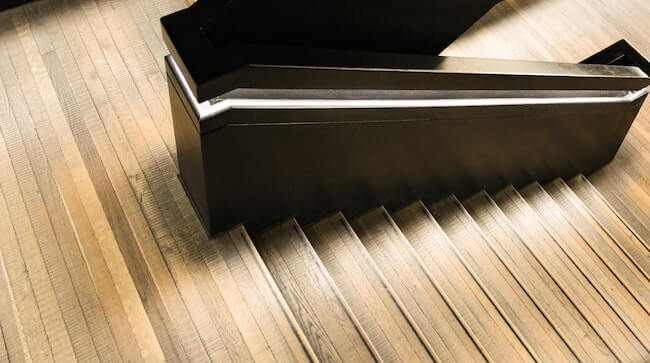
Vinyl tile can be used on stairs, but it behaves very differently here than on flat floors. Stair treads concentrate foot traffic at the front edge, and even small amounts of flex can weaken the adhesive bond over time.
Compared to vinyl planks or stair rated LVT, tile format vinyl has more seams per step. Those seams sit in the highest impact zones, which makes edge lifting and wear more likely if the tiles are not properly bonded and protected with stair nosings.
On the positive side, vinyl tile is waterproof, easy to clean, and far more affordable than hardwood or stone. When installed over a rigid subfloor with pressure sensitive adhesive and finished with proper trim, it can provide a stable and durable stair surface.
The key is not whether vinyl tile is used, but whether it is installed in a way that controls flexing, protects the front edge of each tread, and maintains slip resistance over time.
How to Install Vinyl Tile on Stairs (Correct Method)
Installing vinyl tile on stairs requires a more controlled installation method than flat flooring because every step includes both a tread and a riser, each of which must be bonded and aligned correctly.
Step 1. Prepare the stair substrate
Vinyl tiles must be installed on a rigid, flat stair base. Any flexing in the stair structure will weaken the adhesive bond and cause seams to lift over time.
Remove all carpet, underlay, tack strips, staples, and old adhesive. Tighten any loose stair treads with screws so they are firmly fixed to the stringers. Fill gaps, cracks, and screw holes with wood filler, then sand the surface smooth. Vacuum thoroughly so no dust or debris remains.
If the stairs are covered with plywood or underlayment, the surface must be smooth, dry, and clean. Uneven or dirty subfloors will telegraph through the vinyl and lead to poor adhesion.
Step 2. Dry-fit the stair layout
Each stair consists of two surfaces: the tread (horizontal) and the riser (vertical). Vinyl tiles should be planned so that seams do not fall on the front edge of the tread, which is the highest impact zone.
Dry-fit the tiles on each step before applying adhesive. Center the tile on the tread whenever possible, and place cut edges against the wall or the riser where they are less visible and less likely to lift.
This layout step prevents narrow strips at the stair nose and helps the finished staircase look balanced and durable.
Step 3. Measure and cut the tiles
Measure every tread and riser individually. Stairs are rarely perfectly square, so do not assume each step is the same size.
Cut vinyl tiles using a utility knife and a straight edge. Where tiles meet a wall or stringer, leave a small expansion gap of about 2 to 3 millimetres. This allows for minor movement without forcing the tiles to buckle.
Step 4. Glue the riser first, then the tread
Always install the riser before the tread. This allows the tread tile to overlap the top of the riser, protecting the seam from foot traffic and moisture.
Use a pressure-sensitive vinyl flooring adhesive that is designed for resilient flooring. Avoid construction adhesive, silicone, or caulk, as these do not allow for proper bonding or long-term flexibility.
Apply the adhesive evenly, press the vinyl tile into place, and smooth it firmly to remove air pockets. Work one step at a time, starting from the bottom and moving upward.
Step 5. Install stair nosings
Vinyl tiles on stairs must be finished with a stair nosing or edge trim at the front of each tread.
Stair nosings:
- protect the exposed tile edge
- prevent lifting and peeling
- improve slip resistance
Without a stair nosing, vinyl tiles will eventually fail at the front edge of the step, which is the area that receives the most impact and wear.
Common Problems With Vinyl Tile on Stairs
Vinyl tile can perform well on stairs, but most failures are caused by installation mistakes rather than the material itself. Because stair treads and risers concentrate stress in a small area, even minor errors can lead to visible wear or safety issues.
Seams placed on the stair edge
The front edge of each tread, often called the stair nose, takes the highest impact from foot traffic. When vinyl tile seams are positioned here, the adhesive is gradually broken down, which leads to edge lift and peeling.
No stair nosing or edge trim
Without a stair nosing, the exposed tile edge is unprotected. Over time, this allows moisture, dirt, and repeated impact to work under the tile, causing the corners to curl and the tread surface to loosen.
Using peel and stick tiles
Peel and stick vinyl tiles are designed for flat, low-stress floors. On stairs, they rarely provide enough bond strength to resist movement and impact, which makes lifting and shifting far more likely.
Flexible or uneven subfloors
If the stair substrate or plywood underlayment flexes under weight, the adhesive layer is repeatedly stressed. This causes vinyl tiles to lose their bond and creates hollow spots that can be felt when walking.
Incorrect adhesive
Construction adhesives, caulk, or general purpose glues do not allow vinyl to expand and contract properly. Pressure-sensitive vinyl flooring adhesive is required to maintain a secure bond while allowing minor movement.
Poor surface preparation
Dust, old adhesive, or small debris left on the stair treads prevent proper contact between the vinyl tile and the subfloor. This leads to bubbles, weak bonding, and premature wear.
Final Note
Vinyl tile can be a practical surface for stairs when it is installed over a rigid subfloor, bonded with the correct adhesive, and finished with proper stair nosings. Most problems associated with vinyl tiles on staircases come from poor surface preparation, weak bonding, or exposed edges rather than from the material itself.