Sticky laminate floors are one of the most common household cleaning frustrations. Knowing how to clean sticky laminate floors properly is essential, because the issue is often caused by residue left behind from cleaning products rather than dirt itself. Even after mopping, that build-up can make floors feel tacky and attract more dust, dirt, and grime.
Why Do Laminate Floors Get Sticky, and What’s The Best Way to Clean Them?Laminate becomes sticky when cleaning products leave behind residue, especially soaps, multi-surface cleaners, or too much floor solution. The best way to clean sticky laminate floors is to use a residue-free cleaner, warm water, and a microfiber mop, followed by a light rinse to remove leftover films.
Most of the stickiness comes from how laminate interacts with liquids. Because it has a sealed surface, anything left behind, soap, cleaner, or spills, sits on top and becomes tacky as it dries.
- Sticky Laminate Floors Are Caused by Residue Left on the Surface
- Using a Light Mist of Cleaner Protects Laminate from Water Damage
- Microfiber Removes Sticky Residue Safely Without Damaging Laminate
- Abrasive Pads Scratch Laminate and Permanently Ruin the Protective Layer
- Rinsing with Clean Water Stops Residue Buildup and Prevents Stickiness
In this guide, we explain why laminate gets sticky in the first place and show you the best methods to remove residue safely without damaging the floor’s protective wear layer.
Laminate floors have a sealed topcoat that doesn’t absorb liquid, so soaps, vinegar mixes, and strong cleaners often dry into a residue that causes tackiness and dullness. The goal is to remove that surface film without adding excess moisture.
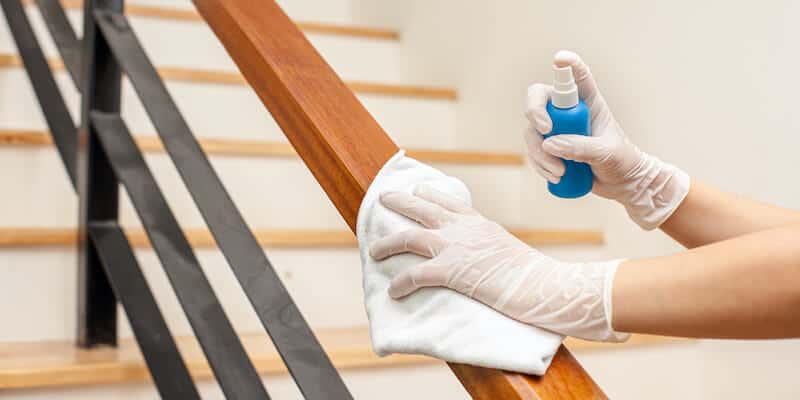
Lightly mist the sticky area with a residue-free laminate cleaner or warm water with a small amount of mild dish soap. Wipe with a microfiber cloth or mop, avoiding abrasive pads.
For stubborn sugar or drink spills, place a warm water compress on the spot for 1–2 minutes, then wipe clean. Finish with a quick rinse using plain water to remove any remaining film—this final step is what stops the stickiness from returning.
Key Takeaways
Sticky floors come from residue, not the laminate itself.
Most tackiness is caused by leftover soap, multipurpose cleaners, or dried spills sitting on top of the floor’s sealed surface. Laminate doesn’t absorb liquids, so any film left behind stays sticky until it’s removed.
Light misting prevents moisture damage.
Laminate flooring is moisture-sensitive, and soaking it can cause swelling or warping at the seams. A light mist gives you just enough liquid to dissolve residue without letting water seep into the boards.
Microfiber lifts residue without scratching.
Microfiber traps sticky films and grime using soft, non-abrasive fibers. It removes buildup cleanly while protecting laminate’s thin protective wear layer, which can scratch easily and cannot be refinished.
Abrasive pads permanently damage the surface.
Scrub pads and rough sponges cut into laminate’s topcoat, causing dull spots, micro-scratches, and long-term dirt trapping. Because laminate can’t be sanded or repaired, any abrasive damage becomes permanent.
A quick rinse is the key to preventing stickiness from returning.
Even gentle cleaners can leave light films if not removed. A final pass with clean water ensures the surface dries residue-free, leaving the floor smooth and preventing the tacky feel from reappearing.
Sticky Laminate Floors Are Caused by Residue Left on the Surface
Sticky laminate floors occur when residue sits on top of the laminate wear layer, not inside it. Because laminate flooring has a sealed melamine topcoat, it doesn’t absorb liquids the way natural wood does. Instead, cleaning product buildup, detergent film, and surfactant-based cleaners dry on the surface and create a sticky film that attracts dirt.
Most tacky flooring issues come from multipurpose cleaner residue, non-rinse cleaners, and incorrect cleaner usage, especially soaps and solutions that leave behind chemical residue. When these products don’t evaporate cleanly, they form sticky patches, cause floor finish dulling, and increase dust and dirt adhesion with every step.
Spills are another contributor. Sugar spills and drink spills leave behind surface contamination that becomes noticeably tacky as it dries. Without proper removal, this residue bonds to the top layer of HPL or LPL laminate flooring, making the floor feel permanently sticky.
In short, the problem isn’t the laminate itself, it’s the residue sitting on the sealed surface. Removing that film is the key to restoring a smooth, clean finish.
Using a Light Mist of Cleaner Protects Laminate from Water Damage
Laminate flooring is highly water-sensitive, and even small amounts of excess liquid can lead to moisture damage. Unlike tile or vinyl, laminate has an HDF core (high-density fiberboard) beneath the wear layer. This core has a defined water absorption rate, and too much liquid increases the risk of floor swelling, seam expansion, and edge warping. If the boards have already started to swell, buckle, or lift, see our guide to fixing lifting laminate flooring before cleaning again.
Using a light spray or misting technique prevents oversaturation. A minimal amount of cleaner allows you to break down residue while avoiding water infiltration into the joints or edges. This is why manufacturers such as Pergo, Quick-Step, and LifeProof recommend minimal-water cleaning techniques in their official care guides.
A laminate-safe, residue-free floor cleaner delivered through a spray bottle offers controlled cleaning dilution, ensuring the surface gets just enough moisture to loosen buildup without compromising the floor’s moisture resistance. This method protects the laminate structure while still allowing effective cleaning.
Microfiber Removes Sticky Residue Safely Without Damaging Laminate
Microfiber mops and microfiber cloths are the safest and most effective tools for cleaning laminate because their non-abrasive cleaning action lifts residue without scratching the surface. The dense, fine fibers create electrostatic fiber action, allowing them to attract and hold sticky particles, dried spills, and light films through natural residue lifting rather than friction.
Unlike harsher scrubbing tools, microfiber relies on gentle cleaning tools that are fully laminate-safe materials, preventing surface wear and preserving the protective layer. Their dirt trapping fibers also support streak-free cleaning, making them ideal for restoring clarity to sticky areas.
| 💡 Should you use abrasive pads on laminate floors?No! Abrasive pads scratch laminate’s thin protective top layer, leaving permanent dull spots and exposing the surface to dirt and moisture. Laminate can’t be refinished, so any abrasion causes irreversible damage. Additional information is covered in the section below ↓ |
Both dry/damp mopping methods work with microfiber: a dry cloth collects loose dust and debris, while a lightly dampened pad removes any remaining film. Lint-free cloths, Bona microfiber pads, Swiffer dry and wet cloths, and other options found in laminate flooring maintenance kits all fall under this category of soft cleaning textiles designed specifically to protect laminate.
Abrasive Pads Scratch Laminate and Permanently Ruin the Protective Layer
Abrasive scrub pads and scouring pads damage laminate because they cut directly into the melamine resin layer that forms the floor’s protective surface. This top layer has limited laminate scratch resistance, and once it’s compromised, micro-scratches develop quickly. These scratches lead to surface dulling, scuff marks, and long-term topcoat degradation.
Products such as Scotch-Brite pads, steel wool, and abrasive sponges are common cleaning mistakes on laminate flooring because the material is non-refinishable flooring. There is no way to sand out damage! When the melamine overlay is scraped, the wear layer thins, causing surface etching that exposes the decorative print beneath. This type of protective wear layer damage is considered irreversible damage and often violates laminate warranty terms.
Because laminate relies on its factory-applied coating for durability and its AC (Abrasion Class) rating for performance, any abrasion undermines both appearance and structural protection. Avoiding abrasive tools is essential to preventing permanent surface deterioration.
Rinsing with Clean Water Stops Residue Buildup and Prevents Stickiness
A clean water rinse is essential for removing leftover cleaner that can dry into a thin film on laminate. Even residue-free products can leave light traces if the rinse cycle is skipped, leading to gradual buildup and renewed tackiness over time. A simple rinse pass breaks this cycle by fully clearing the surface before it dries.
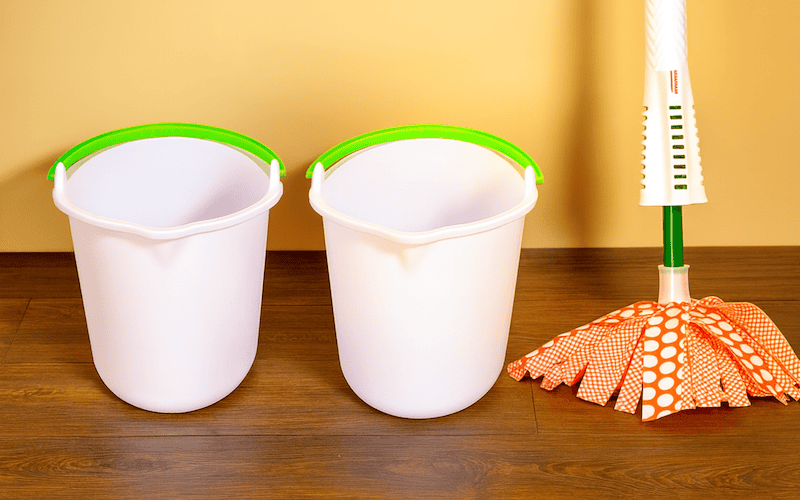
Using a microfiber rinse pass with water from a clean water bucket helps with effective film removal while maintaining a streak-free finish. This supports true no-residue cleaning, which is critical for keeping laminate smooth and responsive to future maintenance.
| 💡 Should you use warm or cold water on laminate floors?Warm water is best because it dissolves sticky residue more effectively and evaporates faster, reducing moisture risks. Use only a light mist—never soak laminate floors. |
After rinsing, focus on properly drying laminate floors. Allowing water to sit can slow evaporation, so use light airflow or fan-assisted drying to speed up the final cleaning step. When combined with a controlled spray-and-wipe method, this prevents moisture issues and ensures eliminating tackiness becomes a consistent outcome rather than a temporary fix.